

Dedicated 5G coverage for sites that need more control. Connect people, devices and moving equipment across large, busy or complex sites with a wireless network built for that location.
Private 5G comes into its own when coverage, mobility, device demand or network control start pushing beyond what WiFi and public mobile can comfortably support.
Dedicated wireless | Large sites | Moving devices | More control
WHEN ORDINARY WIRELESS STARTS TO STRUGGLE
Across large operational sites, campuses, sport and entertainment venues and public environments, connectivity has to deal with changing footfall as well as moving teams and devices.
When demand suddenly increases, users can feel it straight away through slower access, dropped connections, poor call quality, delayed apps and unreliable digital services.
Private 5G creates a dedicated wireless environment shaped around the site, the people and devices using it, and the services that need to stay available - helping maintain a more consistent experience even when demand changes.
Extend coverage across larger, complex or harder-to-reach spaces where conventional WiFi may struggle to provide a consistent experience.
Give high-demand areas dedicated wireless capacity when more people, devices or applications are competing for connectivity.
Maintain connectivity for handhelds, vehicles, sensors and equipment as they move across wider operational areas.
Manag eaccess, coverage and connected devices around your own operational requirements rather than relying entirely on shared public infrastructure.
CHOOSE THE RIGHT WIRELESS APPROACH
Private 5G is not the right answer for every environment.
The strongest design depends on how the site is used, where people and devices move, how demand changes and how much control the organisation needs.
For some organisations, Private 5G may be the right fit on its own. For others, the best result may come from combining it with WiFi and other connectivity. Start with what you need the network to do, then choose the approach that best supports it.
01
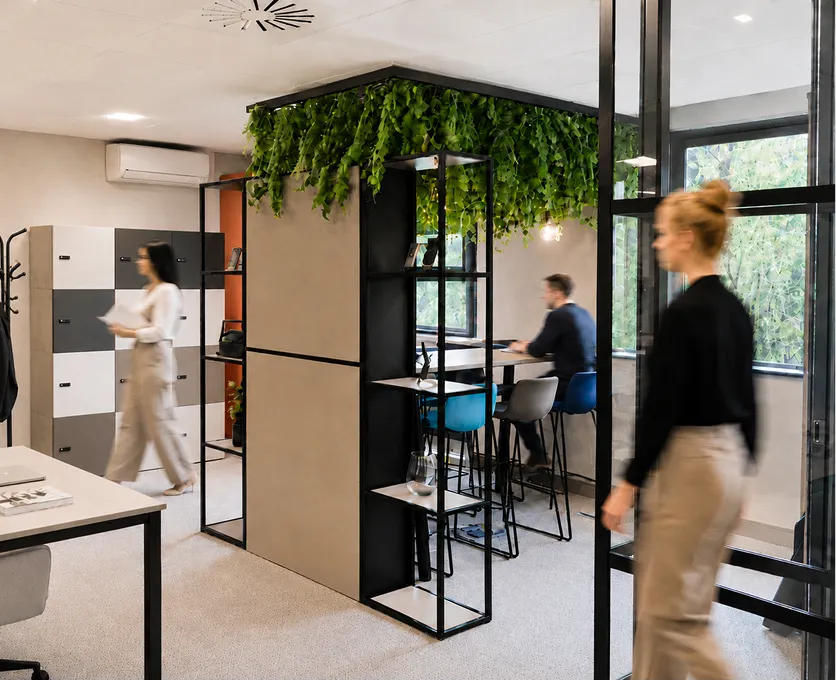
Best suited to offices, meeting spaces and indoor environments where dependable local coverage, simple access and consistent everyday performance are the main priorities.
03
Combine WiFi and Private 5G where different areas or services have different needs, with public mobile supporting people and devices beyond the site where appropriate.
02
Best suited to offices, meeting spaces and indoor environments where dependable local coverage, simple access and consistent everyday performance are the main priorities.
04
Shape the network around how people, devices and services actually use the site, helping teams work smoothly and customers get a more consistent digital experience.
Resilience and flexibility
Private 5G can sit alongside WiFi, fixed connectivity and public mobileas part of a wider network design. That gives larger organisations more flexibility when footfall increases, device numbers grow, sites change or another part of the network becomes unavailable.
01
Use Private 5G alongside existing connectivity to reduce reliance on a single wireless network or technology.
02
Add capacity where high footfall, growing device numbers or busy applications are putting pressure on existing wireless infrastructure.
03
Keep operational devices and important services away from general useror guest traffic where greater control is needed.
04
Extend coverage, connect new areas and support more users or devices asbuildings, operations and demand evolve.
WHERE PRIVATE 5G EARNS ITS PLACE
Private 5G becomes most useful where coverage, movement, device density or operational importance creates a clear need for a dedicated wireless network.

Support teams, operational systems and connected devices across campuses, civic buildings and complex public environments.

Support mobile teams, connected equipment and digital services where consistent access across busy or complex sites matters.
Keep handhelds, trackers, vehicles, sensors and operational systems connected as they move across large sites.

Support connected machinery, sensors and mobile equipment where coverage, device density and operational control matter.
One accountable team
Private5G only makes sense where it solves a genuine operational challenge.
dbfb can look across your existing connectivity, WiFi, mobile, resilience and connected devices before deciding where dedicated 5G adds value.
01
Consider Private 5G alongside the connectivity and infrastructure already supporting the site rather than treating it as a separate project.
02
Use WiFi, public mobile, fixed, satellite and Private 5G where each technology makes most sense for the site and service.
03
Shape the network around people, devices, movement and busy areas, while keeping critical services available, secure and compliant.
04
Build additional capacity, alternative routes and future device demand into the wider network design from the start.
CONNECTED SERVICES
The network may sit alongside WiFi, fixed connectivity, IoT platforms and existing mobile services, with each technology supporting different users and devices.
Connect sensors, trackers and operational devices across estates using the network that best fits each use case.
Use WiFi for suitable workplace users and devices while Private 5G supports wider mobility or operational requirements.
Plan backup connectivity and continuity around the systems and services that need to stay online.
Manage traffic across sites and connections more intelligently where multiple routesform part of the wider network.
quick answers
next step
Review the environment, devices, movement, demand and services that need to stay available, then compare Private 5G with WiFi, public mobile and a blended approach.